
“How long will this take?” It is one of the first questions every brand owner asks, and one of the hardest to answer honestly. A stock product with your logo can be on a ship in a few weeks. A brand-new bottle with custom tooling, new packaging and fresh certifications can take three to four months.
This guide breaks the baby bottle OEM/ODM process into seven stages, with realistic durations for each and the factors that move them. Use it to build a launch plan that survives contact with reality.
The Short Answer: Typical Timelines at a Glance
| Stage | Typical duration | Main driver |
|---|---|---|
| 1. Inquiry & requirement definition | 1–5 days | How complete your brief is |
| 2. Quotation & costing | 2–7 days | Customization and MOQ |
| 3. Sampling & prototype | 7–25 days | Stock sample vs. custom sample |
| 4. Tooling & mold development | 25–45 days | New mold and part complexity |
| 5. Pre-production & approvals | 5–15 days | Artwork and testing readiness |
| 6. Mass production | 15–35 days | Quantity, material, line capacity |
| 7. Inspection, packing & shipping | 5–15 days | Inspection scope and freight mode |
These are indicative ranges across the industry, not a promise from any single factory—your product, market requirements and order size will shift them.
Stage 1: Inquiry & Requirement Definition (1–5 days)
Everything downstream is faster when this stage is done properly. Prepare a short brief covering: product type and target age group, material preference, target retail price band, market and required compliance, estimated first-order quantity and target launch date.
Factories can quote faster—and more accurately—when they can see your reference images, capacity specs and packaging expectations. Vague briefs are the number one cause of slow, unusable first quotes.
Stage 2: Quotation & Costing (2–7 days)
You should receive an itemized quote rather than a single number: unit price, tooling, decoration, packaging, sample fees and terms. Read it line by line; our guide to reading a baby bottle manufacturing quote covers the six factors behind the price and the red flags worth questioning.
This is also the stage where order size is settled. If the quoted minimum does not fit your launch plan, it is worth negotiating now rather than after tooling starts—see how MOQs work and how to lower them.
Stage 3: Sampling & Prototype (7–25 days)
There are two very different kinds of samples, and confusing them is a common source of timeline disappointment:
- Stock samples (7–12 days) come from existing molds and show you material, finish, nipple flow and general feel. Fast, but they do not represent your final custom design.
- Custom samples (15–25 days) reflect your shape, color and branding. Depending on complexity, they may be produced by 3D printing, CNC or a trial mold run—each with a different fidelity level.
Budget at least one round of feedback. If your design is complex or the nipple geometry matters, plan for two.
Stage 4: Tooling & Mold Development (25–45 days)
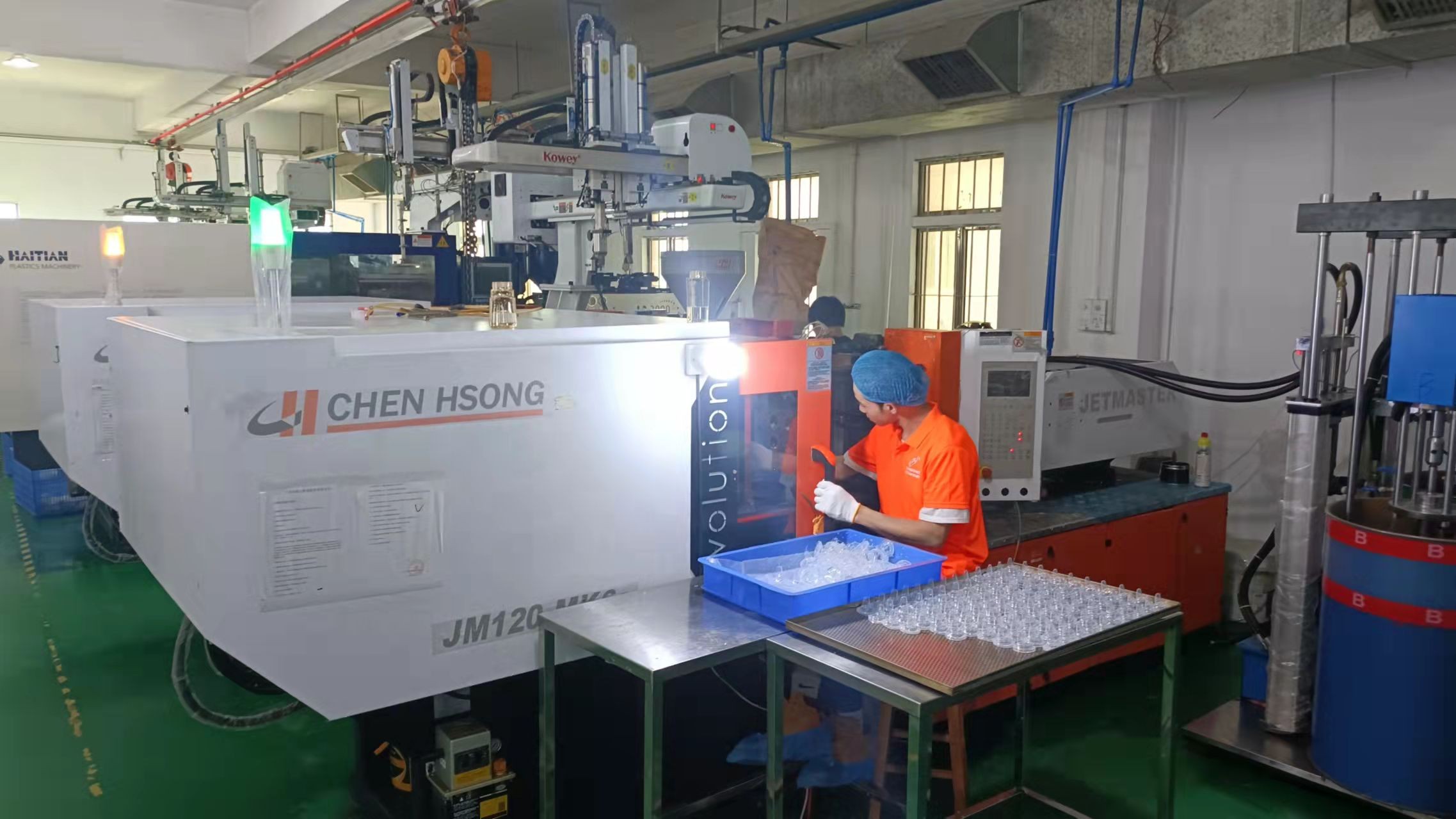
If your design requires a new injection mold, this is usually the longest single block of the project: mold design and review, steel cutting, cavity work, cooling layout, then trial shots (T1) to validate fit, function and finish.
Two things shorten this stage: approving the 3D design quickly, and having your decoration and packaging artwork ready so trial parts can be evaluated in their real context. Before tooling starts, settle ownership and exclusivity in writing—our guide to mold ownership and IP protection explains the clauses that matter.
Stage 5: Pre-Production & Approvals (5–15 days)
Before mass production, you approve a golden sample and lock the specification: resin grade, color, dimensions, nipple flow, decoration position, carton artwork and labeling. Food-contact compliance work (FDA, EN 14350, LFGB, CPSIA and related requirements, depending on your markets) should be scheduled in parallel, not after production. Our overview of baby product safety certifications covers what each market expects.
Late artwork changes are the most common cause of slippage at this stage.
Stage 6: Mass Production (15–35 days)
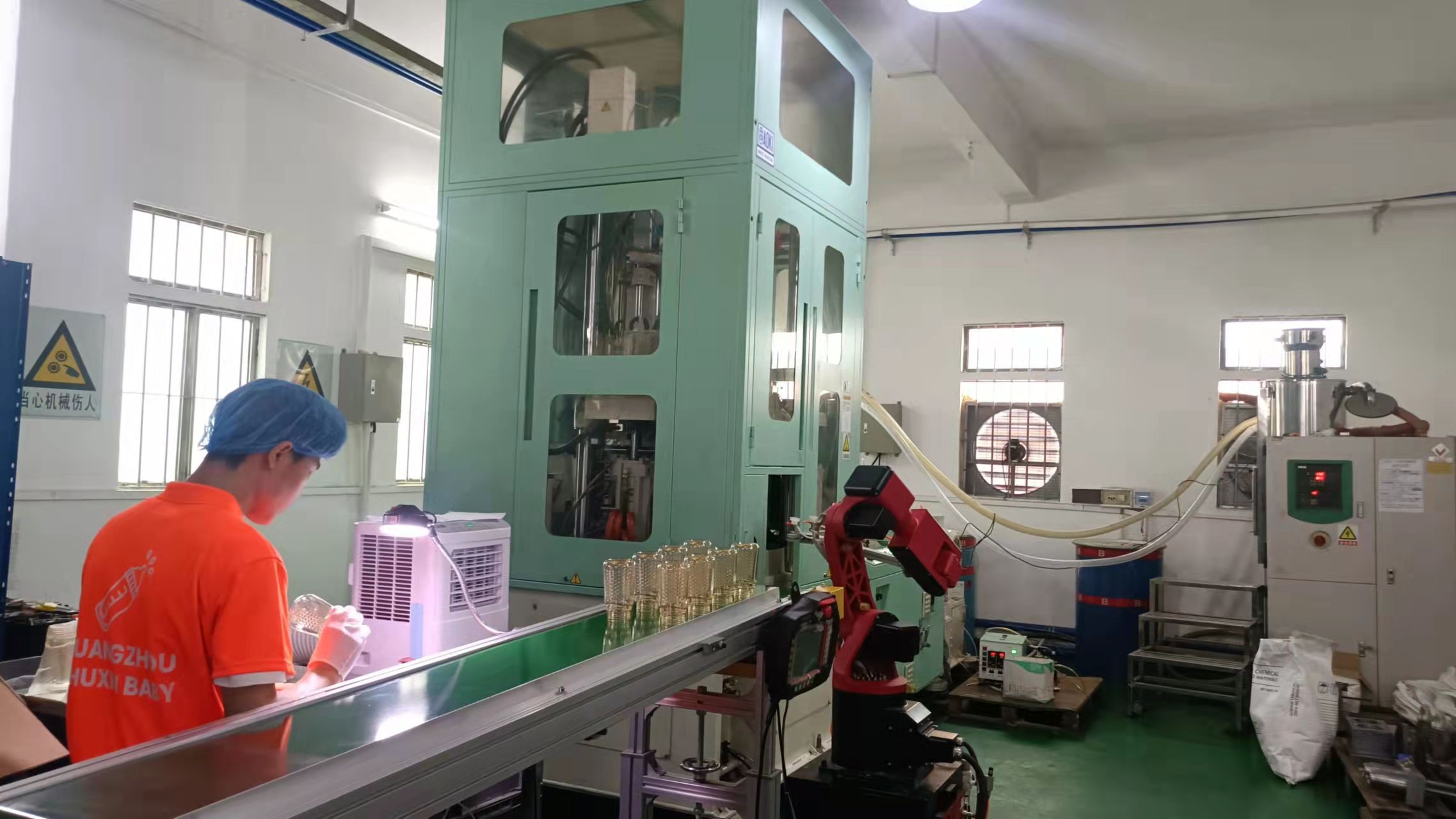
Production time depends on quantity, material and how many lines your order occupies. PPSU and multi-cavity runs are planned in larger batches; multi-SKU orders with several colors and decorations take longer to sequence than a single-variant order.
Ask about in-process quality control rather than just final inspection: material traceability, in-line checks and batch testing are what protect you from discovering a problem in your warehouse. See how quality control works on the production floor.
Stage 7: Inspection, Packing & Shipping (5–15 days)
Pre-shipment inspection, packing to your carton spec, palletizing, booking and documentation. Sea freight adds 20–40 days of transit depending on route; air freight cuts that to days at a much higher cost per unit. If you are launching against a fixed retail date, work backwards from the delivery date—not forwards from the order date.
What Slows a Project Down
- Incomplete specifications at inquiry, forcing repeated clarification rounds.
- Late packaging artwork, which blocks the golden-sample approval.
- Compliance testing started late, so it delays production instead of running in parallel.
- Design changes after tooling begins, which can mean re-cutting steel.
- Factory holidays—notably Chinese New Year, when many factories close for one to three weeks and capacity around the holiday is tight.
- Payment and approval delays on your side: contracts, deposits and sign-offs are part of the critical path.
How to Compress the Timeline
- Send a complete brief with references, target price, market and volumes in the first message.
- Approve samples and artwork within 48 hours where possible, and assign one internal decision-maker.
- Run compliance testing and packaging development in parallel with tooling.
- Consolidate SKUs, colors and packaging variants for the first order, then expand on reorders.
- Plan around holidays and peak season: book capacity two to three months ahead of a Q4 launch.
- Agree QC checkpoints and photo updates in advance, so you are never waiting on information.
The Bottom Line
A realistic baby bottle OEM/ODM project runs roughly 10–16 weeks from a complete brief to a shipped order, with custom tooling at the long end and stock-product customization at the short end. The timeline is rarely lost in production—it is lost in the gaps between decisions.
BebeFree has manufactured baby bottles and feeding products for global brands for over 15 years across PP, PPSU, glass and silicone, in our own 8,000 m² facility. Send us your brief and target launch date, and we will map the stages against your calendar. Request a project timeline or see how our OEM/ODM service works.
Related reading: Baby Bottle MOQ Explained · How to Read a Manufacturing Quote · Mold Ownership & IP Protection · How to Choose the Right Baby Bottle Manufacturer · Baby Bottle Samples Explained · How baby bottles are made · Inside our factory · Lead time: capacity & peak season
Pingback: Baby Bottle Samples: How Sampling Works Before Bulk
Pingback: Baby Product Safety Certifications Explained: FDA, CE, CPC & More - BebeFree
Pingback: How Baby Bottles Are Made: Injection Moulding for Buyers - BebeFree
Pingback: How to Choose the Right Baby Bottle Manufacturer: A Complete Guide - BebeFree
Pingback: Baby Bottle Production Lead Time: Capacity & Peak Season Planning
Pingback: How to Audit a Baby Bottle Factory: Buyer's Checklist
Pingback: Inside Our Baby Bottle Factory: 8,000 m², 6 Production Lines
Pingback: Starting a Private Label Baby Bottle Brand: Step-by-Step Guide - BebeFree