
Choosing a supplier from a catalogue and a few emails is a gamble. In baby feeding products, the cost of a bad supplier is not a late shipment—it is a recall, a marketplace suspension, or a batch of bottles you cannot legally sell in your target market.
A factory audit is how you replace assumptions with evidence. This guide gives you a practical, area-by-area checklist you can use on site, on a video call, or through a third-party inspector.
Why a Factory Audit Matters More in Baby Products
Feeding products sit in a stricter category than most consumer goods: they touch food, they are used by infants, and they are regulated differently in every market. Two factories can quote the same bottle and mean very different things—different resin grades, different QC depth, different testing documentation.
An audit answers three questions that no quotation can: Can they actually make this? Can they prove it? Will the tenth batch match the first?
Before You Visit: Desk Research (30 Minutes)
- Business licence and scope. Confirm the legal entity, registered address and that its scope covers plastics manufacturing or the relevant category.
- Export experience. Ask which markets they ship to and for references from brands in markets similar to yours.
- Certification copies up front. Request test reports and certificates for the specific material and product type—not a general brochure. Note the certificate number, issuing laboratory and expiry date.
- Product depth. A factory that only makes one bottle shape has less process maturity than one that moulds, assembles, decorates and packs a full feeding range.
The Audit Checklist: Seven Areas
1. Legal & Certification
- Certificates match the material and product you are buying, and are still valid.
- Reports come from recognised third-party laboratories, with the test scope visible.
- The factory can explain which standard applies in which market—see our overview of baby product safety certifications.
2. Facility & Environment
- Logical flow: raw material storage → moulding → assembly → decoration → packing. Crossed flows invite contamination.
- Clean, uncluttered floors and organised storage. Housekeeping is the cheapest visible proxy for process discipline.
- Resin stored sealed, labelled and off the floor—not in open sacks next to finished goods.
3. Equipment & Capacity
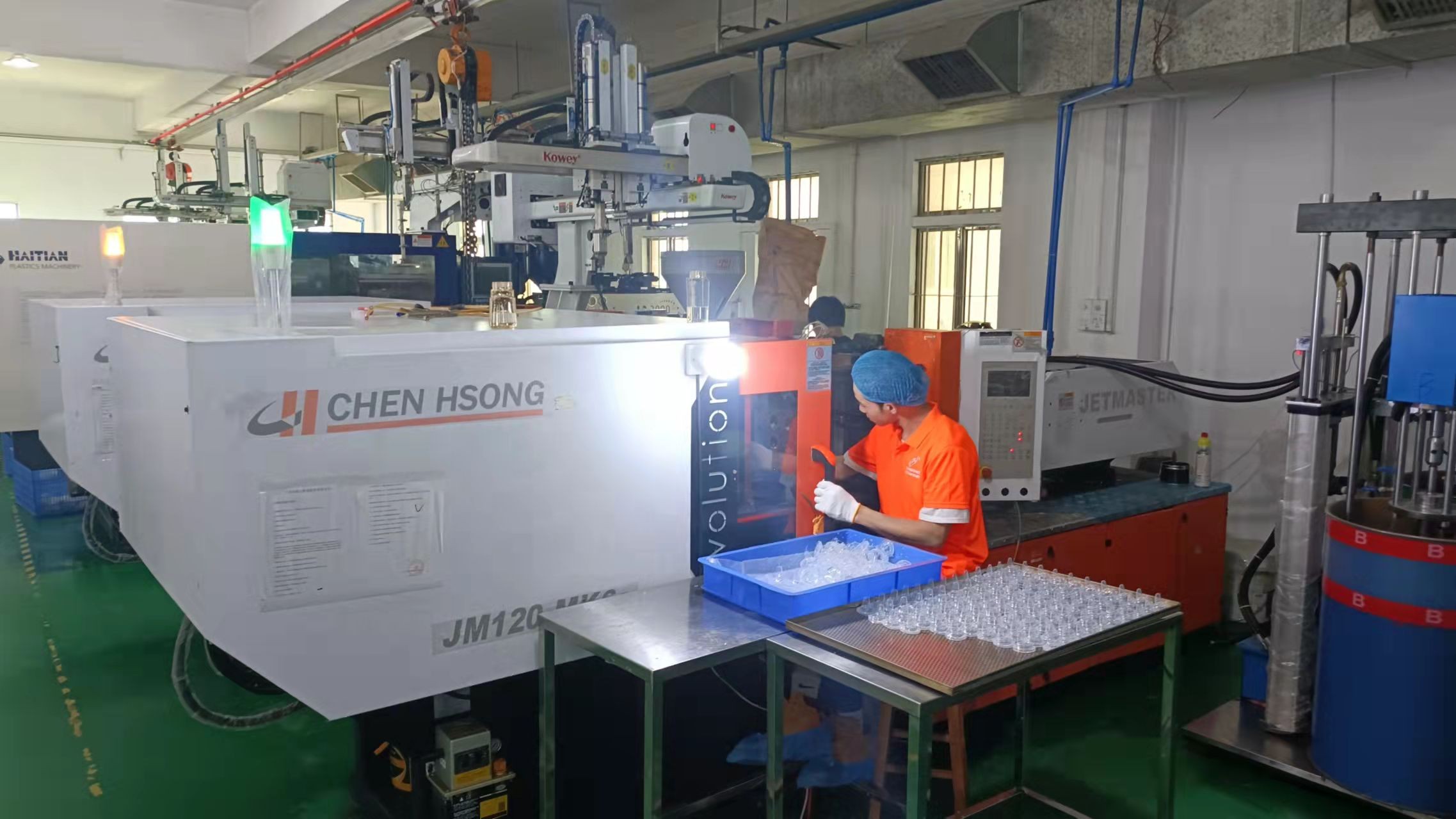
- Injection moulding machines with visible tonnage, plus automation such as robotic take-out arms.
- In-house mould making, or a documented partner and maintenance regime.
- Assembly, decoration (printing) and packing capability under the same roof, or clearly managed outsourced steps.
- Realistic monthly capacity—and which machine or station is the bottleneck.
4. Mould Management
- A mould library with identification numbers.
- Maintenance and repair records—worn tooling shows up as inconsistent wall thickness and flash.
- Written ownership documentation if you are paying for tooling; see mould ownership and IP protection.
5. Quality Control System
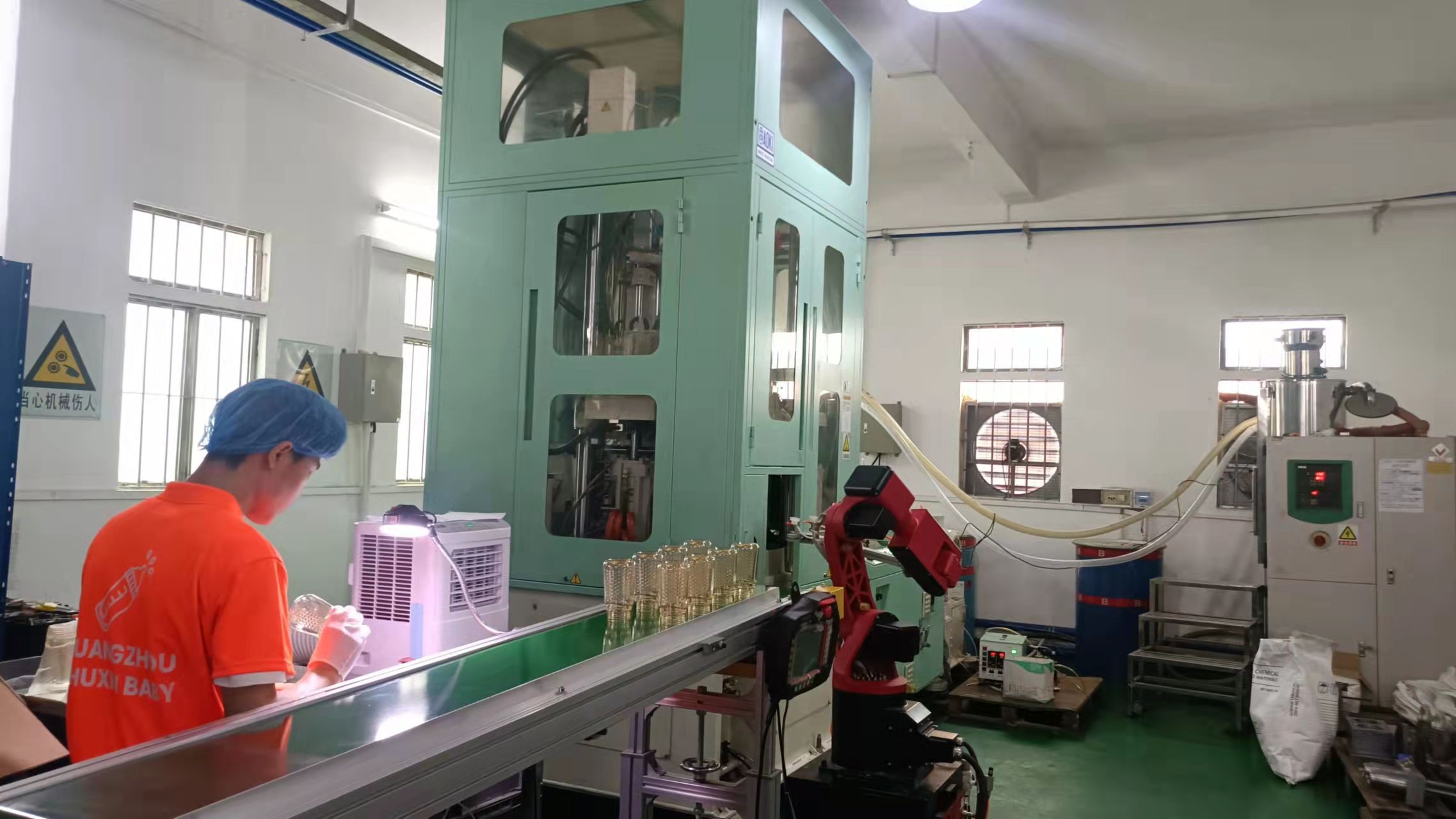
- Incoming (IQC), in-process (IPQC) and outgoing (OQC) inspection—not only final inspection.
- On-site testing instruments with visible calibration stickers and dates.
- Batch traceability: someone should be able to trace a finished bottle back to the material lot and machine.
- Records of defect rates and a corrective action process (CAPA) with examples.
6. Materials & Traceability
- Named resin grades with supplier certificates for food-contact use.
- No recycled or unlabelled material in food-contact parts unless the standard explicitly permits it.
- Material lot numbering that links incoming resin to finished batches.
7. Workforce & Work Instructions
- Visible work instructions at each station and consistent operator practice.
- Hygiene in assembly and packing areas: hairnets, gloves, no food or drink on the line.
- Training records for operators on critical stations.
Ten Questions to Ask on the Walk-Through
- Which machine made the sample you sent me?
- Can I see the test report for the exact resin grade in my product?
- How do you trace a finished bottle back to its material lot?
- What was your defect rate last quarter, and how is it measured?
- Show me the last corrective action you closed out.
- When were these instruments last calibrated?
- Who owns the moulds kept on the racks—yours or your customers’?
- Which steps are done in-house, and which are outsourced?
- What is your realistic monthly capacity if I order 200,000 units per year?
- What happens if a batch fails inspection after I approve the golden sample?
The answers matter less than the way they are answered. A factory with a real system can point to a record. One without one will answer in generalities.
Red Flags
- Certificates with no visible scope, number or expiry date.
- Resin stored in unlabelled sacks or open containers.
- No calibration stickers on measuring instruments.
- No traceability from finished goods back to material lots.
- “We’ll take care of testing after production”—compliance is a design input, not a postscript.
- Refusal to allow an audit, a video walk-through or a third-party inspection.
- Mould racks with no identification, and no answers about who owns what.
If You Cannot Travel: Remote Audits
A remote audit is a reasonable second best and can be done in a week: request a live video walk-through (not a pre-recorded clip), ask for close-ups of certification documents, calibration stickers and material labels, and commission a third-party inspection agency to visit on your behalf for a first-article or pre-shipment inspection.
Then plan one physical visit before your second order. The relationship you are building is longer than the first container.
The Bottom Line
Audit for systems, not for showrooms. A clean, well-lit facility with robotic take-out and a page of certificates is a good start, but the questions that protect your brand are about traceability, calibration, defect data and corrective action—the boring parts that decide whether batch five equals batch one.
BebeFree manufactures baby bottles and feeding products in our own 8,000 m² facility, with injection moulding, assembly, decoration and packing under one roof, and over 15 years of export experience. We welcome audits, video walk-throughs and third-party inspections. Request a factory audit or see how our quality control process works.
Related reading: How to Choose the Right Baby Bottle Manufacturer · Mold Ownership & IP Protection · Baby Bottle OEM/ODM Timeline · Baby Bottle MOQ Explained · Our OEM/ODM Service · Baby Bottle Samples Explained · FDA Requirements for Baby Bottles · EN 14350 & CE Marking for the EU · How to read third-party test reports
Pingback: How to Choose the Right Baby Bottle Manufacturer: A Complete Guide - BebeFree
Pingback: Baby Product Safety Certifications Explained: FDA, CE, CPC & More - BebeFree
Pingback: CPSIA & CPC Compliance for Baby Bottles & Feeding Products
Pingback: FDA Requirements for Baby Bottles: Compliance & Myths
Pingback: Inside Our Baby Bottle Factory: 8,000 m², 6 Production Lines
Pingback: Baby Bottle Quality Control: From Raw Material to Shipping
Pingback: EN 14350 & CE Marking: Baby Bottles in the EU Market
Pingback: Custom Packaging for Baby Products: A Brand Owner's Guide - BebeFree
Pingback: How to Read Third-Party Test Reports: SGS, TUV & Intertek